
Hiram Conibear | 1903 – 1904
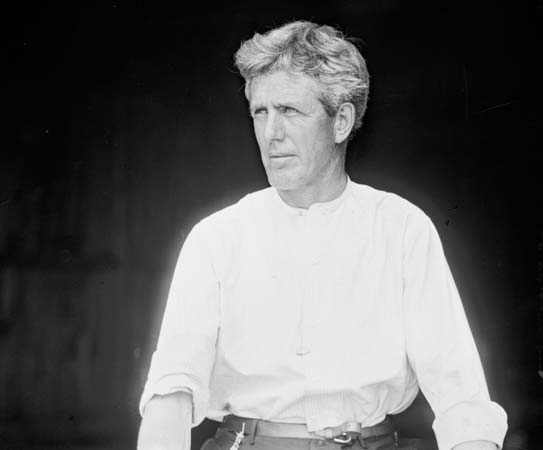
Hiram Bingham Conibear served as the sixth football coach and the first to hold the title of Director of Athletics. He held the position and coached the Football team for two years from the Fall of 1904 to the Spring of 1905.
President Oscar Craig sought out and hired Conibear to build an athletic department capable of fielding teams that could compete with the best institutions in the Northwest. Before his arrival, the school’s athletics department focused on creating opportunities for physical and mental fitness. However, the landscape surrounding colleges and universities was shifting, and athletics was gaining importance in other ways.
College sports were on the precipice of national popularity, filling sports pages across the country. Newspapers allowed readers everywhere to follow the great battles between Harvard and Yale or Minnesota and Michigan. With that attention came opportunity, and colleges quickly realized the value of having their names appear before wider audiences.
Craig could read the tea leaves and sense an opening for Montana. Schools were beginning to band together, forming athletic associations and conferences. These groups established common rules, eligibility standards, and coordinated schedules, hoping to attract more media coverage. The extra attention would raise the university’s profile and help attract more students.
The University of Washington advocated for a Northwest Conference, with loose agreements that dated to the late 1890s. In 1902, Washington, Oregon, Washington State, Whitman, Oregon Ag (Oregon State), and Idaho did play a conference slate. However, the Conference would not have legs to stand on until 1908. The Big Six, as they were referred to, needed more schools to create a strong, nationally recognized association.
President Craig needed someone who could build an athletic department from the ground up—someone who could recruit and train athletes. His search led him to Illinois, where he approached Hiram Conibear with an opportunity he couldn’t resist.
Early Life, Education, & Career
Hiram Conibear was born September 5, 1871, in Mineral, Illinois. From an early age, he developed an interest in the physical sciences. He came of age in the same era as Theodore Roosevelt; Americans were leaving the countryside for the cities. Concern developed that people would become physically weak and less self-reliant. Sport was seen as one way to keep society active and healthy. Roosevelt’s call for a “strenuous life” echoed similar philosophies of the time. Conibear had developed a keen interest in the burgeoning field of athletic training.
Conibear began his higher education at Northern Normal University (later Dixon University). He initially pursued a business degree at his father’s request. It took Hiram just one year to realize this was not a path for him. He changed schools and major, earning a degree from the Chautauqua School of Physical Training in New York. This degree would set the stage for his early work in athletics. After school, Conibear moved to Chicago and worked as an athletic trainer for Amos Alonzo Stagg, the legendary coach at the University of Chicago. Conibear focused on conditioning the athletes in an era when Stagg was pioneering modern training methods. He served as trainer for Chicago’s undefeated 1899 football team, which finished 16–0–2. Victories over Notre Dame, Penn, Purdue, and Minnesota helped the University of Chicago claim the Western Conference championship. Harvard and Princeton shared the National Championship, but many felt Chicago was the best team in the country. That success brought wider attention to Conibear’s abilities, and soon after the season he was recruited to join the University of Illinois athletic staff.
After a couple of years at Illinois, Conibear was approached about the job at Montana.
The 1903 Football Season
Conibear approached his role with energy and discipline. Contemporary newspaper accounts offer a glimpse into the radical changes he would make for athletics. Early practices focused on structured workouts with physical conditioning drills. This contrasted sharply with previous seasons, when practice relied on basic instruction and informal scrimmaging. Observers noted that the hold-over players looked a bit tired, and their fitness limits were being tested. Conibear also recruited a large number of men to participate in practices, an effort to find the most athletic men on campus rather than the most experienced players. As fall practice progressed, reporters noted that he filled practices with intense drills. Conibear brought skill-based drills from his former stops at Chicago and Illinois that reflected a systematic approach the players were not used to. Conibear moved toward modern coaching practices rather than the sandlot-style game in previous years.
Montana finished the 1903 season with a 2–5 record; the results don’t capture the year’s significance. The team opened strongly, defeating Fort Missoula twice by scores of 32–0 and 11–0—early evidence that Conibear’s conditioning had paid off against a team of locals and former players. As the schedule progressed, the level of competition rose sharply. Montana squared off against Montana School of Mines (Butte), the state’s strongest team, and suffered two decisive losses.
Their next two games marked a milestone for the program. For the first time, they faced competition outside of Montana. They boarded a train to Moscow, Idaho, and tested themselves against Idaho and Washington Agricultural College (now Washington State). Montana would be beaten emphatically, losing 28-0 in each contest.
The season concluded with the rivalry game against Montana Agricultural College on Thanksgiving Day. A worn-out and weary team would limp into Bozeman and lose their 5th game in a row by a score of 15-6.
While the team struggled to win games, the season marked a turning point. Montana was transitioning from a loosely organized squad to a structured team. They also faced stiffer competition, which helped Conibear evaluate what he needed to do for the next season.
The 1904 Football Season
During year two, Conibear’s efforts took the form of on-field success. The 1904 squad improved to 3–2. Numbers that might not jump off the page, but make no mistake: the 1904 team was the first great Grizzly football team. The 3- 2 record came against the best competition any Montana team had faced to that point; frankly, it’s a record that would hold up in any era of Grizzly football.
Conibear continued his break with the past and scheduled the best teams he could find. Another element was his ability to help the team raise the funds needed to travel, since the school didn’t have the money to cover the full cost of long-distance travel. In earlier years, Montana played for a “State Championship” against various schools and athletic clubs scattered around the state. This prize was not noteworthy to the Big Six in the Northwest; it was also not very appealing to Conibear.
The team again opened with a tune‑up victory over Fort Missoula, winning 10–0. Conibear used the game more as a scrimmage, testing players to find his best units.
Next, Conibear hauled the team on its first trip to Utah, where it faced the University of Utah and Utah Agricultural College (now Utah State). Montana lost to Utah 17–0 but rebounded with a huge victory, beating Utah State 5–0. At the time, football was dominated by mass plays with no neutral zone. Players lined up shoulder to shoulder, trying to form wedges and use force to move the ball forward. The game was brutal. To this point, Montana had not fielded players that could physically match up with the big schools. This was just one year before the “Death Harvest” season of 1905, when 19 players died.
This was a penultimate moment for Montana football. Montana’s win over Utah State was an enormous leap forward, beating one of the better programs in the West. Additionally, Montana faced two of the preeminent programs and went toe-to-toe physically. Conibear had put together a squad that was physically the equal of the Big Six.
After returning home to Missoula, Conibear loaded his team onto a train for Pullman, Washington. The previous year, Washington State had blown out Montana 28–0. Now was his chance to show the Big Six Montana was ready. The Bears from Missoula lost 6–5, falling just short as Washington State converted its extra point and escaped with the win. Rumors popped up about the fair officiation as Washington State could ill afford to lose to Montana. Either way, in 12 months, Montana went from an outclassed team to an evenly matched peer.
The season concluded with a remarkable and decisive victory over the honyockers from Bozeman. Montana won 79–0 in the most lopsided game in the history of the rivalry. Montana State hung its head so low afterward that the program fell into disarray for the next three seasons. They couldn’t field a team willing to play Montana again until 1908. It created a rivalry that lives on to this day. The victory showcased the superior program Conibear had built in just one year (aside from the final score, some of the facts may be disputed and/or based on emotion).
Overall, the 1904 season marked a turning point. In only two seasons, Conibear had transformed Montana from a loose-knit group of students into a bona fide football team.
Impact on Montana Athletics
Although Conibear’s overall record at Montana was modest at 5–7, his true impact lay beyond wins and losses. He arrived when collegiate athletics at the university were in their infancy. He introduced structure, discipline, and organization. He coached multiple sports—football, baseball, and track—reflecting the broad responsibilities early athletic directors carried. His tenure represents a transitional moment when the university’s athletic identity began to take on a more formal and competitive shape. He also propelled Montana into the conversation with the Big Six.
One important figure in Griz history played for Coach Conibear – Robert H. Cary. Cary was one of Montana’s earliest standout athletes—tough, disciplined, and highly regarded. After his playing days in Missoula, he transferred to Yale, where he competed as a middle‑distance runner. At the time, Yale had one of the nation’s elite track teams. Cary later returned to Missoula and became a head coach in the mid-1910s. Cary would guide some of Montana’s strongest seasons during the early Pacific Coast Conference era. Tragically, his coaching career was cut short when he died suddenly while still leading the program, a loss that deeply affected the campus and the young team he had built.
As for squads outside of football, Conibear didn’t field a basketball team during his time at Montana, though he did attempt to organize a schedule in the winter of 1905. He put together a Baseball team in the spring of 1905 and won both games. More games were scheduled, but they were either rained out or canceled when one team was unable to travel. He successfully put together a track team. The University’s yearbook, The Sentinel, declared the Varsity Track Team as the undisputed Champion of the state in 1904. Based on their dominance of a track meet Conibear organized in Missoula. He invited all athletes who could meet basic standards. Examples included running the 50-yard dash in less than 6.5 seconds; the pole vault would start at 7ft, and competitors had to run a 6-minute-or-better mile. During the spring of 1905, the track team drew less interest. It is unclear whether Conibear was unable to create a schedule or was ready to take on his role with the White Sox organization.
Time With the Chicago White Sox
At the conclusion of the 1905 spring semester, Hiram Conibear had the opportunity to return to Chicago and become an athletic trainer for the Chicago White Sox. He would spend a couple of years there, including time on the 1906 championship team. The 1906 Sox were known as the “Hitless Wonders,” stunning the baseball world by defeating the heavily favored Chicago Cubs during the 1906 World Series.
University of Washington
After his time with the Chicago White Sox, Conibear joined the University of Washington. At Washington, Conibear created a lasting legacy. Initially hired as an athletic trainer, he was soon asked to take over the university’s rowing program. At the time, he had no formal experience in rowing and reportedly joked that he didn’t “know one end of a boat from another.” Yet that lack of traditional background became an advantage. Instead of relying on inherited methods, he approached the sport as a problem to be studied and solved.
A 1946 Time Magazine article gives a glimpse into the personality and type of coach he was:
“One day, nearly 40 years ago, shaggy‑haired Hiram Conibear, ex‑trainer of the Chicago White Sox, stood on the shore of Lake Washington and cussed through a megaphone, so loud that his University of Washington oarsmen could hear.”
— Time Magazine, “Sport: A Sweep for Conibear,” June 30, 1946
Conibear openly showed humility when he took over the Washington program, telling Time Magazine that he had to “cuss a little” just to bluff his way along. Instead of relying on tradition, he taught himself the sport from scratch. He studied physics and experimented at home with a broom as an oar. He began questioning the long, sweeping Oxford‑style stroke that dominated the era. Conibear believed it wasted energy and put rowers in an uncomfortable position. The result was a new stroke technique that minimized drag and applied force smoothly and directly. His ideas led to what became known as the Conibear Stroke—a shorter layback, a quick and forceful entry of the oar, and a rapid release at the finish. The technique revolutionized American rowing.
In 1913, Washington became the first Western crew to compete in the Intercollegiate Rowing Association regatta. The team finished third, a remarkable achievement that announced the arrival of West Coast rowing on the national stage.
Under Conibear’s leadership, Washington’s rowing program rose quickly. Conibear even encouraged boatbuilders George and Dick Pocock to relocate to the university, giving Washington exclusive access to the finest racing shells in the country. The partnership left an indelible mark on American rowing. The Pocock built boats propelled US Rowing teams to 6 Gold medals in 10 Olympic Games between 1924 and 1960.
Death and Legacy
Hiram Conibear’s career was cut short in 1917 when he died in Seattle after a fall from a tree at his home. He was only forty-six years old.
Despite the abrupt end to his life, his influence endured. At Washington, his athletes and successors went on to achieve national championships and Olympic success, carrying forward his methods and philosophy. His contributions helped establish the University of Washington as one of the nation’s premier rowing programs.
His impact at Montana was subtle, but more important than he gets credit for. He arrived when the university’s athletic program lacked structure. He left it more organized and set up a formula to help Montana compete with the Big Six. He laid a foundation that would lead Montana to join the Pacific Coast Conference and be recognized as a major University in the Northwest.